

Thursday 14th May at 7pm – 8.15 pm (UK time)
Topic: Poetry Space Prize 2025 – pamphlet launch online
Time: May 14, 2026 07:00 PM London
Join Zoom Meeting
https://us02web.zoom.us/j/82053853623?pwd=yhJ4YCZV3cFWeytpcTTU3EiJAx7chF.1
Meeting ID: 820 5385 3623
Passcode: 127387
Category A- Poetry Space Prize 2025 winner in debut category:
Uncompromising, striking poems that taught me things I didn’t know, about cosmonauts, flight, change and the cost of aspiration. Unified around the theme of exploring space, each poem has a slightly different angle, playing in various daring ways with form and rhyme schemes. A very impressive, interesting, unusual pamphlet, with some wonderful stand-out lines, ‘The beauty of loneliness does not last long’, and the human level always deeply felt, moving, memorable and awakening.
Rosie Jackson, judge
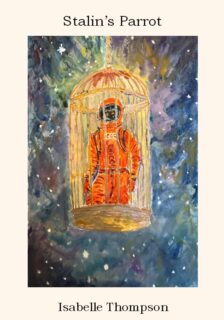
Isabelle Thompson’s pamphlet, Stalin’s Parrot, is one of the most impressive debuts I’ve read in years. Witty, highly intelligent, and deeply moving, these poems begin with the early Soviet space programme and by degrees admit the narrator’s presence, at once vulnerable and reverent. Boundaries for human and more-than-human lives appear everywhere: Stalin’s parrot in its cage, Komarov in his spacecraft, the dog Laika in her capsule, the speaker who ‘barely leave[s] her bedroom’. We try to surmount these boundaries through tenderness, through intimacy, through voice, in the kindnesses bestowed on Laika before her journey, in Komarov’s imagined last letter to his beloved wife, in the speaker envisioning herself at one with birds, ‘to sing, sing, sing’. Refreshingly original and carefully sculpted, Thompson’s poems are at once probing and joyous, yearning and revelatory.
Carrie Etter
Category B winner – for established poets:
This was the undisputed and outstanding winner. A superb sequence of poems, utterly brilliant in their conception and delivery. Original, varied in style, yet all of a piece and beautifully sustained and unified in their underlying vision, voice and imagination. I would be very proud to have written this.
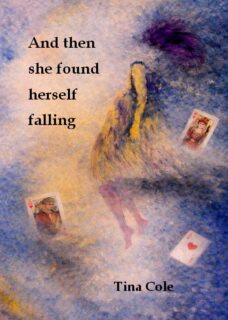
The poems take the figure of Alice in Wonderland, and borrow from that work some of its well-known scenes and idioms, but with a unique slant of using this as a lens for filtering personal and often fractured female experience. I only realised at the end that there is no first person (a welcome relief after the fashion for so much confessional poetry), yet the 3rd person feels very revealing, and the use of pronouns has clearly been deeply considered (the poem starting ‘Along the way the I that was me turned italic’ is a brilliant example of this.)
The rich metaphors are surreal and astonishing throughout, visually rich and always apt; nothing feels contrived; the opening out onto wide female issues gives it a subtle feminist handle; the use of Paula Rego’s art in some of the poems (ekphrastic poems with a difference) as a source of imagery, perspective and inspiration is a perfect mirror for the poet’s own way of seeing, taking it deeper and further. There is ample passion, humour, wit, craft, imagination, here and some startling, disturbing, thought-provoking angles onto things. I absolutely loved and admired this sequence, and can’t wait to see it published and have it on my shelves.
Rosie Jackson, judge
Sample poems:
The Handshake in Space
17th July 1975
If two men from a broken world could meet
in the wholeness of space and clasp hands to greet;
if Leonov and Stafford loved each other,
Soviet and American brothers;
if a handshake could thaw a freezing Cold War,
and if enemies finally saw –
or at least glimpsed – they were two halves of one
person – it might be possible to come home.
There is a tree in Bath whose branches have merged
into each other, clasped and converged,
and every spring its magnolia flowers
put out their hands to the April showers.
The Earth embraces easily. If only
we could be as cosmonauts, magnolia trees.
from Stalin’s Parrot by Isabelle Thompson
The Cartography of Unreason
Is every Alice stitched from fragments
of songs and passed down stories?
Girls who wander about demanding answers
growing taller until the clouds are inside their throats
shrinking until ants know their secrets.
Does falling turn them inside out their descent
stitched from moth wings fairy tales
and Prozac tearing the fabric of innocence
until the childhood rocking horse is stilled
the pack of cards no longer complete?
The White Rabbit persona will hide anxiety
under a waistcoat eyes wound too tight ears twitching
always late. While March Hare pours yesterday’s tea
brewed from mistakes and trees whisper secrets
in rough tongues of dry bread and dripping.
With voices like static on a dead radio station,
Mad Queen mothers are lobbing grenades of arbitrary justice.
By the end will these Alices recognise their reflections?
Will they gather at the edge of chessboards that bleed into the sea
and meet themselves coming back older or perhaps not yet born?
from And then she found herself falling by Tina Cole